Artikel 6
The ugly face of cartoons
Disney - Tom & Jerry - Looney Tunes
en 10/02/2022 14:17 Mahmud El Adwi

Media constitute a large part of peoples' awareness. Throughout the ages, visual media have been one of the most powerful means to send certain messages, influence the minds of the masses, and even change the course of history.
One of the most important aspects of the visual media is the cartoon, which plays a key role in forming the personality of children, and thus in shaping the future.
Cartoons are an integrated world that moves the child to various other worlds, which have the ability to build his personality, which will represent later, well-established concepts formed in the subconscious mind that are granted to the child, of course in addition to other surrounding factors.
But, can a cartoon have a dark and ugly side?
Disney Plus warns now viewers of racist stereotypes in older films with the following message:
“This program includes negative depictions and/or mistreatment of people or cultures, These stereotypes were wrong then and are wrong now. Rather than remove this content, we want to acknowledge its harmful impact, learn from it and spark conversation to create a more inclusive future together.”
This warning includes some important and ancient films such as 'Dumbo', 'Peter Pan' and 'The Jungle Book'

In the film 'Dumbo' for example:
The tape was shown for the first time in 1941, a period when the United States was still living clear racial segregation between whites and blacks, sponsored and blessed by Jim Crow Act, which enshrined segregation of people of color in schools, transportation, and public places.
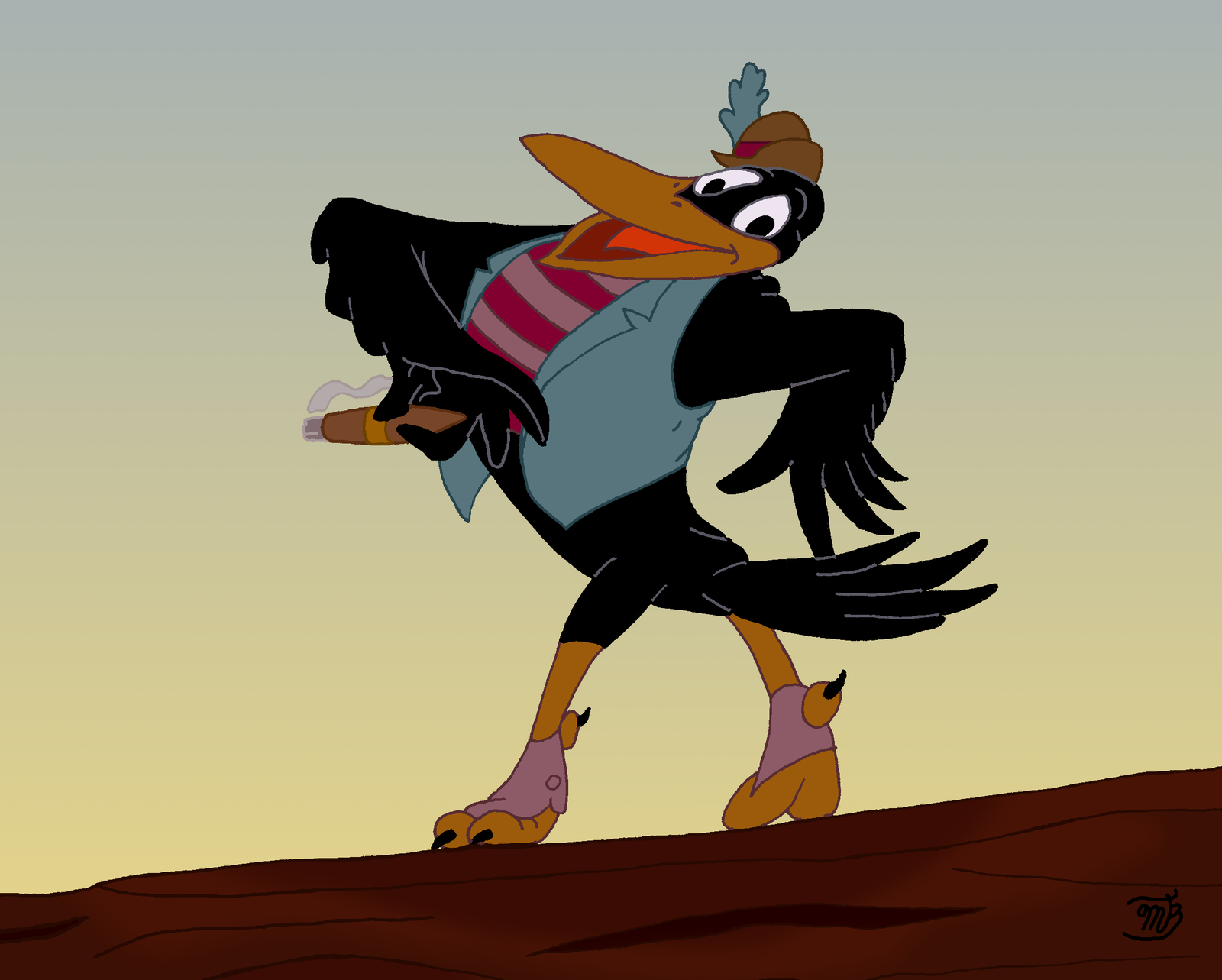
In the film, we meet Jim Crow, one of the supporting heroes in the film. In fact, the name given to the crow, "Jim Crow," is the same as the name of the laws that legislate apartheid.
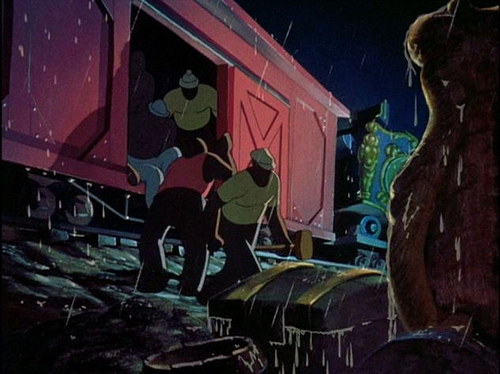
The film also contains a song called "Song of the Roustabouts".
The song is about a group of workers, the color of their skins is black, they have no faces or visible features, they clearly sing “We work all day, we work all night. We never learned to read or write. We're happy-hearted roustabouts. When other folks have gone to bed. We slave until we're almost dead. We're happy-hearted roustabouts. We don't know when we get our pay. And when we do, we throw our pay away. We get our pay when children say. With happy hearts, "It's circus day today" ”
A happy song with a beautiful melody, of enslaved black workers without faces, singing with joy to their slavery.

The topic is not limited to Disney, unfortunately many cartoons have had a dark and ugly side. And here I am talking about some of the most famous and widespread cartoon in the world.
Tom & Jerry:
Who doesn't know the most famous duo among cartoon characters, that fun and feisty duo, that made us laugh for long. But...All critics of the current era assert that Tom & Jerry is not suitable for children, due to: semi-pornographic, violence, and alcoholic drinks scenes. And the worst point among all is racism.
Tom and Jerry shows might be one of the most racist shows towards black people.
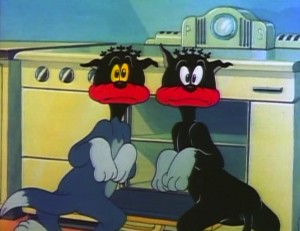
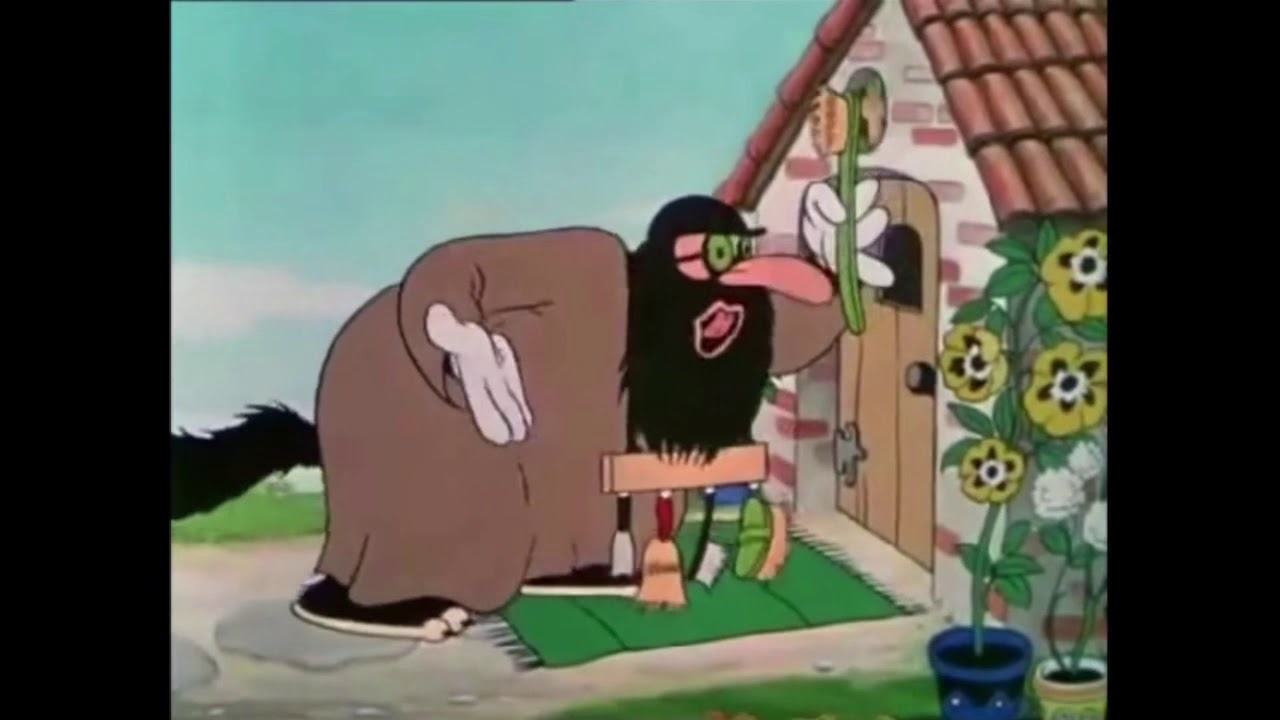
The characters in Tom & Jerry whenever they get muddy or exploded, they transform into black characters with big red mouths and curly hair. This is the stereotyped image of African Americans at that time.
In addition the scene where Tom smeared Jerry's face with cigar smoke and puts on his neck tie to look like a dancing clown. Jerry then begins to dance with a dance similar to the dances of the Africans, or as they were in the days of slavery, showing the black slaves in the circus.
That scene reinforces the stereotype that African Americans are only for clowning and dancing.

As for the character of the maid, Mama Touches, based on a character from the movie Gone with the Wind, this role was played by Hattie McDaniel. She is a maid working in the home of a white family, but the character of Hattie McDaniel herself is based on the real-life character of a maid named Mama Molly, who was a nanny and nurse, and was very beloved by children. This character has been completely distorted and turned into a cruel, frightening and violent character in the cartoon.
Looney Tunes:
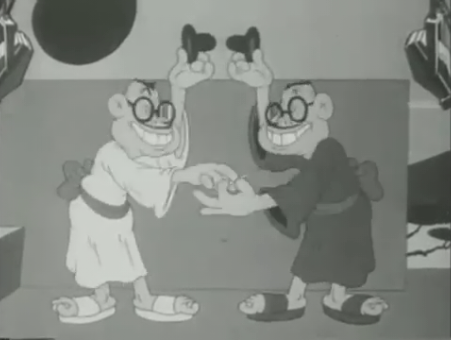
Tom and Jerry weren't the absolute worst. Looney Tunes may beat it when it comes to racism, as it used to show full episodes of completely racist topics, drawings and dialogues. Here are some examples:- Japanese character: These episodes were filmed during World War, in 1943 Looney Tunes released an episode called "Tokio Jokio". The episode talks about a Japanese newscast, generally speaking, political, artistic and sports news in Japan, and of course portraying Japan as the most unsuccessful country in all fields.
The Japanese characters in the episode appeared with figures of short stature, large teeth and narrow eyes.


- African American character: An episode of Looney tunes depicted African Americans as monkeys, and another one depicted them as slaves, in addition to too many offinsive episodes against African Americans.


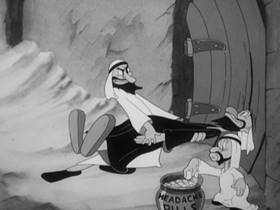
A character wearing Arab costume appears, using an alcoholic drink's bottle as a binoculars, and his name is Ali Baba (the mad dog of the desert). Porky takes shelter in the fortress of the French Legion while the Arabs try to storm it in stupid and backward ways that show them as a group of losers, backwards and uncivilized.
Ofcourse, there must be a suicide bomber, in the last attempt to storm after despair, one of the Arab figures attaches a missile to his head. He tries to blow himself up in the fortress, but somehow fails and blows up his remaining Arab colleagues, turning all into tents.
After many failed storming attacks of the Arabs, Ali Baba raised a banner that says this fort unfair to Arabs.
The phrase on the banner, reminds of the Palestinian cause. A year before this episode was shown, a proposal was issued by the Peel Commission and the Woodhead Commission in 1939.
The proposal appeared to divide Palestine into two states, an Arab state and a Jewish state, and the Arabs objected that the partition was completely unjust as in the scene.
This objection was used by episode director Bob Clampett in this scene as a clear and explicit hint about the purpose of the episode. This proposal was officially implemented seven years after the episode was shown.
Eighty years later, Looney Tunes apologized for the episode and deleted it.


Fortunately, most children do not pay attention to these details, but with repeating the same stereotypes, negative concepts are automatically imprinted and entrenched in the child's subconscious.
I would like to talk about the Smurfs as well, as they are considered to be one of the world's cartoon heritage. Please click here to read the article.
Thank you